
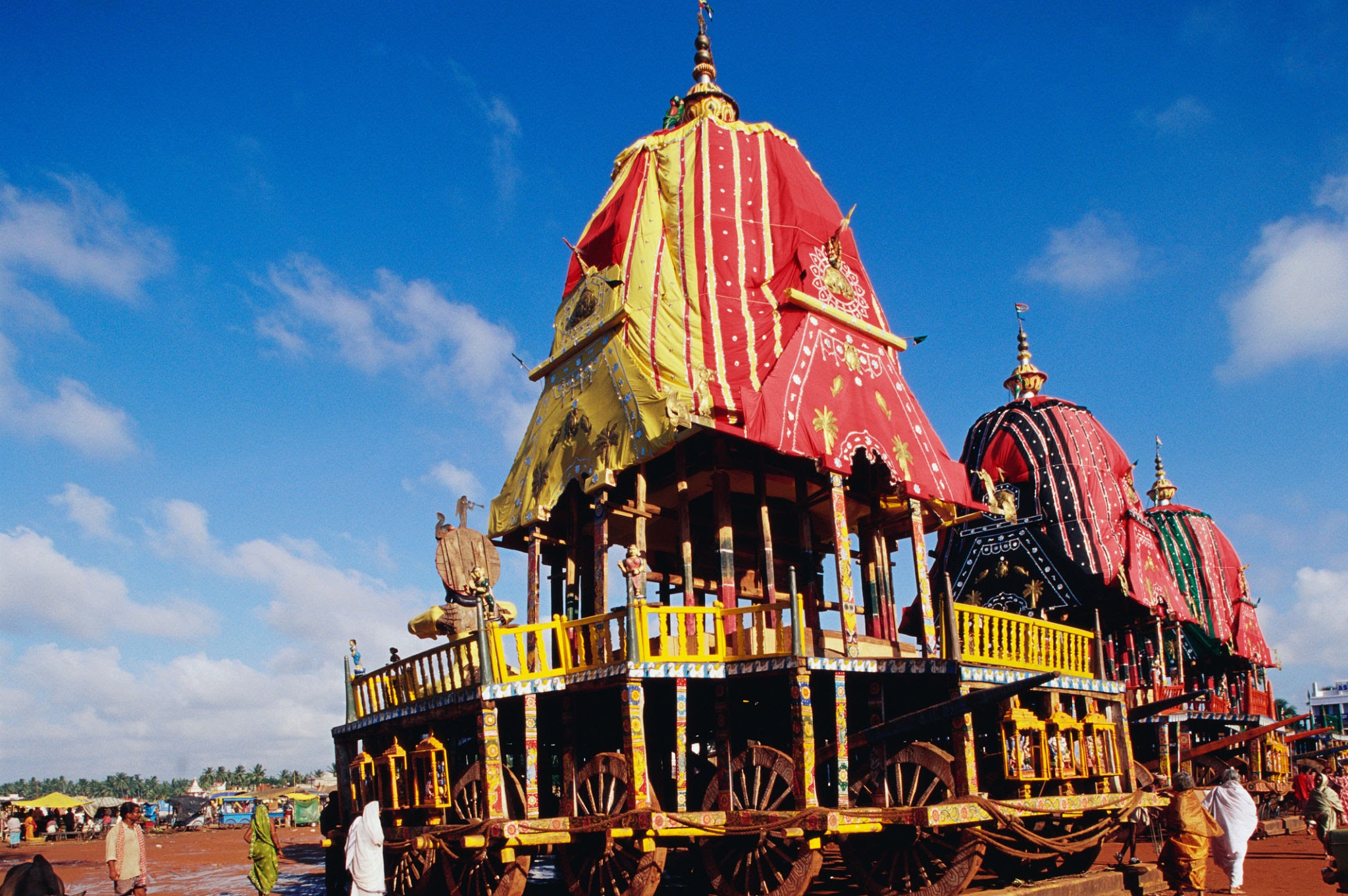
If you grew up in Odisha or belong to the global Odia diaspora, “the panji” is far more than a calendar—it is the heartbeat of cultural life. It defines when the earth rests during Raja, when fresh harvest is offered at Nuakhai, when Snana Purnima closes public darshan before the grand Rath Yatra, and when Manabasa Thursdays fill Margashira homes with the aroma of rice-paste jhoti and Lakshmi lore.
Yet, open almost any mainstream “Hindu calendar” app today, and you are met with a generic national default: English-first labels, flat grid numbers, and zero understanding of Odishan traditions—whether it is the coastal Sri Mandir rhythm of Puri or the Biraja Peetha calendar of northern Odisha.
Odia Panjika (ଓଡ଼ିଆ ପଞ୍ଜିକା) was built to solve this exact problem. It is a free, bilingual web platform, developer API, and daily social updates bot that computes the sky with astronomical accuracy while keeping Odia language, local traditions, and festival narratives intact.
Why Generic Calendar Apps Fail for Odisha
India does not run on a single civil-religious clock. What people casually call “the Hindu calendar” is a family of regional systems. Most generic apps fail in Odisha because they treat the calendar like a standard 24-hour Gregorian grid with regional translations slapped on top.
To understand why a dedicated Odia engine is necessary, we have to look at two foundational concepts: Tithi and Purnimanta.
1. Understanding Tithi: The Orbital Speedometer of the Moon
In the Western calendar, a day is straightforward: Earth completes one rotation, 24 hours pass, and the date changes at midnight.
A Tithi is completely different. It is a lunar day, defined by the precise angular distance between the Sun and the Moon in the sky.
- A full lunar orbit forms a 360 degree circle around Earth.
- Every time the Moon moves 12 degrees ahead of the Sun, one Tithi passes (360 degree/ 12) = 30 Tithis per lunar month).
- Because the Moon’s orbit is elliptical, its orbital speed changes dynamically. As a result, a single Tithi can last anywhere from 19 to 26 solar hours.
Why Sunrise Anchoring Matters
Because Tithis do not start or end at midnight, a Tithi like Ekadashi might begin at 3:15 PM on Tuesday and end at 1:40 PM on Wednesday.
In traditional Indian astronomy, a calendar day’s identity is decided by whichever Tithi is active at the exact moment of local sunrise (Udaya Tithi).
The Problem with Generic Apps: If a generic calendar calculates sunrise for New Delhi or Mumbai instead of Puri, or uses a simplified 24-hour average instead of real-time planetary equations, it will declare major observances on the wrong calendar day entirely.
2. Understanding Purnimanta vs. Amanta: How Months Are Named
Every lunar month contains two fortnights (Pakshas):
- Shukla Paksha (Bright Half): New Moon -> Full Moon.
- Krishna Paksha (Dark Half): Full Moon -> New Moon.
Across different regions of India, calendars diverge sharply on one simple rule: When does a month officially end and the next month begin?
┌───────────────────────────────────────────────────────────────────────────┐│ PURNIMANTA SYSTEM (Odisha) ││ Dark Half (Krishna) ──► NEW MOON ──► Bright Half (Shukla) ──► FULL MOON ││ ▲ ││ └── Month begins immediately after Full Moon │└───────────────────────────────────────────────────────────────────────────┘┌───────────────────────────────────────────────────────────────────────────┐│ AMANTA SYSTEM (Western/South) ││ Bright Half (Shukla) ──► FULL MOON ──► Dark Half (Krishna) ──► NEW MOON ││ ▲ ││ └── Month begins immediately after New Moon │└───────────────────────────────────────────────────────────────────────────┘
- Amanta System (Month ends on Amavasya / New Moon): Used in Maharashtra, Gujarat, Andhra Pradesh, and Karnataka.
- Purnimanta System (Month ends on Purnima / Full Moon): Used in Odisha, North India, and parts of Eastern India.
The Festival Mislabeling Pitfall
Because a Purnimanta month starts 15 days earlier during the dark fortnight, two people in different states can look at the exact same moon phase, yet reside in two differently named months.
For example:
- Rath Yatra takes place on Shukla Dwitiya (the 2nd day after the New Moon).
- Under Odisha’s Purnimanta system, this day sits inside the month of Ashadha.
- If an app defaults strictly to an Amanta calculation engine, it risks shifting festival names or miscalculating adhika masa (intercalary month) alignments, showing major observances a month late.
What Odia Panjika Delivers
Odia Panjika bridges astronomical physics with regional tradition. When you open odia-panchang.onrender.com
or query the free API, you get a localized day packet:
| Layer | What It Provides |
| Day Elements | Tithi, paksha, chandra (lunar) masa, soura (solar) masa, nakshatra, yoga, karana, and vara |
| Localization | Exact sunrise and sunset timing tailored to Odisha cities (Puri, Bhubaneswar, Jajpur, Sambalpur, etc.) |
| Tradition Filters | Selectable overlays for Jagannath (Puri), Biraja (Jajpur), and statewide common observances |
| Bilingual Narratives | Curated cultural stories explaining “what this day remembers” in English and proper Odia script (yuktākṣara) |
| Automated Updates | Daily social media broadcasts bringing daily panji highlights straight to your feed |
| Developer API | Documented JSON endpoints for site builders, Discord/Telegram bots, and research |
Built with Engineering Precision
Odia Panjika pairs high-precision astronomical computing with strict cultural guardrails:
- Astronomical Core: Powered by Swiss Ephemeris (
pyswisseph) running in Lahiri sidereal mode to calculate exact planetary positions. - Deterministic Muhurtas: Timings like Rahu Kalam, Abhijit Muhurta, and Gulika Kalam are mathematically computed directly from local sunrise/sunset—never estimated or generated by AI.
- Guardrailed AI Layer: Optional LLM features supply historical anecdotes, temple context, and household notes. AI is strictly sandboxed and forbidden from modifying core astronomical fields (tithi, masa, or nakshatra).
Try It & Build With It

Whether you want to check today’s tithi, track festival dates from anywhere in the world, or integrate Odia calendar data into your own applications:
- Web Application:https://odia-panchang.onrender.com
- API Endpoints:
GET /todayGET /panchang/2026-07-16?tradition=jagannath&city=puriGET /panchang/2026-07-16?tradition=biraja&city=jajpur
Note: On free-tier hosting, the web service may require ~30 seconds to wake on initial load.
🙏 ଜୟ ଜଗନ୍ନାଥ


Leave a Reply