It was past ten. The house was settling into its quiet. I was sitting with my kids in that in-between hour before sleep, the kind of conversation that doesn’t start with an agenda but always ends somewhere you didn’t plan to go.
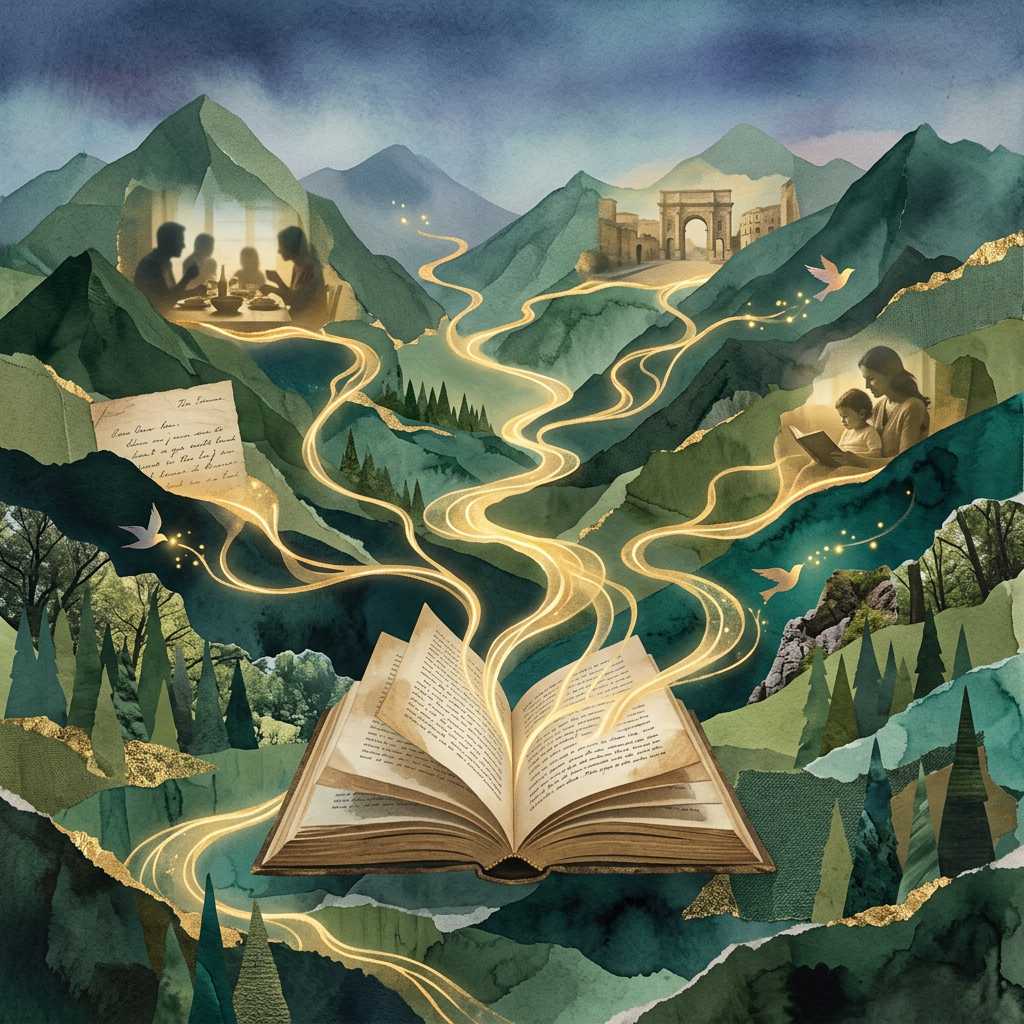
I was talking to them about failure. Not the kind of talk that comes from a textbook or a motivational reel, but the kind that comes from watching too many good people, including myself, take the long and painful route to lessons that were already written down somewhere. I told them: books were invented so that you don’t have to repeat the mistakes of the generation before you. Every generation has the choice to either start from scratch and relearn the same painful lessons, or to pick up where the last one left off and go further. Elevation, not repetition. That was my case.
My son pushed back, the way young people rightly do. Let us experience and learn, he said.
I had an answer for that too. I always do.
But when I woke up the next morning, the certainty of the night before had gone quiet. I lay there for a few minutes, replaying what I had said. And I realized something uncomfortable: I wasn’t giving them wisdom. I was giving them fear dressed as wisdom. They are old enough to make their own decisions, to carry their own weight. What I had done was pull them toward caution before they had even taken a step. I was trying to make them old before they had finished being young.
There is something worth examining in how we experience anything new.
When something new arrives and it feels like play, we lean in. We are excited. We already see a version of the happy ending in our minds. But when something new arrives and it feels like work, a different calculation begins. The chances of failure feel high. The distance to success feels enormous. The imagined end shapes how we feel at the start. We do not look at the small win we might find next week; we fast-forward to the large failure we might encounter in two years.
Is this true for everyone? Not when you are young. When you are young, you jump. You do not calculate the height of the fall. You don’t have the data for it yet. But then life gives you your share of falls and your share of wins. And something shifts. You start to calculate. You think this new calculation is wisdom. You call it experience.
But I am not sure it is. What I have seen, in myself and in people around me, is that after the calculation begins, we do not succeed more. We attempt less. The calculation does not improve the outcome; it reduces the number of times we try. And when you try less, you do not fail less: you simply stop being fully alive. You become careful, guarded, serious all the time. You mistake gravity for depth.
It is the child who falls off the bicycle, laughs, and tries again. It is the child who makes the embarrassing drawing and hangs it proudly on the wall. It is the stupid failures of youth, the ones we wince at when we remember them, that carry the most life. Not because failure is good in itself, but because the willingness to fail without catastrophising it is the engine of everything worth doing.
We lose that engine slowly, quietly, and we call the loss maturity.
There is a passage I keep returning to from the Hagakure, the eighteenth-century text on the way of the samurai. It describes the levels of mastery, and it reads like a map of something far larger than swordsmanship.
At the lowest level, a person studies, but nothing comes of it. He feels that both he and others are unskillful. He is simply lost.
At the middle level, he is still useless in practice, but now he is aware of his own insufficiencies. He can also see the gaps in others. Awareness has arrived, but capability has not caught up.
At the higher level, something changes. He has pride in his own ability. He rejoices when others praise him. He notices the lack of skill in those around him, and this noticing gives him a quiet satisfaction. This is the level most people mistake for arrival.
At the highest level, the man has the look of knowing nothing.
Read that again. He has the look of knowing nothing. Not because he has forgotten, but because the knowing has gone so deep it no longer needs to announce itself. Mastery becomes invisible, even to the one who carries it.
And then there is the level beyond all levels, what the text calls transcendent: the person who is aware of the endlessness of going deeply into a single way. He never thinks of himself as finished. He truly holds his insufficiencies without shame. He never, in his whole life, believes he has finally succeeded. He has no pride, but also no self-abasement. He simply knows the way continues.
Master Yagyu Munenori, one of the great swordsmen of that era, said it plainly: I do not know the way to defeat others, but the way to defeat myself.
That single line carries more instruction than a shelf of self-help books.
When I look back at my conversation with my kids through this lens, I see what I was actually doing. I was operating from the higher level, the one that has pride and a habit of noticing insufficiency in others, even if those others are your own children who have not yet had the chance to try. I was mistaking my experience for their map.
The Hagakure does not say that experience is useless. It says that experience without humility becomes a ceiling. The person who has learned enough to be proud has actually stopped learning. He has started protecting his understanding rather than expanding it.
The child I described earlier, the one who falls and laughs and tries again, is not wise by any conventional definition. But that child is at the transcendent level in one specific and important way: there is no pride to protect. Every fall is just information. Every try is full and unguarded.
Somewhere between that child and the experienced adult who calculates before every step, something essential gets traded away. We trade the willingness to be wrong for the comfort of being careful. And then we call that trade wisdom, and we try to pass it on to our children before they have had the chance to fall even once.
My kids went to sleep that night with some of my worry loaded onto their shoulders. I woke up the next morning and took it back, at least inside myself.
Let them jump. Let them fall in ways I cannot predict and cannot prevent. The job of the generation before is not to remove all the obstacles; it is to leave better paths and wider maps. The rest belongs to them.
And as for me: I am somewhere between the higher level and the highest. I can see my own insufficiencies clearly enough on most days. I know just enough to be dangerous with advice. I am learning to close my mouth a little sooner and to ask a question a little more often.
The look of knowing nothing is not ignorance. It is the hardest kind of knowledge to carry: the knowledge that you have never quite arrived, that the way continues past every point you thought was the end, and that the most honest thing you can say on most days is: I am still learning how to be defeated by myself.
That is where the real work is. Not in preparing others for failure, but in becoming someone who no longer fears your own. A journey towards Vanaprastha has to begin with this realization.

Leave a Reply